
Best Draught Excluders UK 2026
Quick answer
The best draught excluder for a UK home depends on where the cold air is getting in. For a gap under an internal or front door, a long fabric draught excluder that sits at the base of the door is the simplest place to start. For a gap around a door or window frame, a brush strip or a self-adhesive foam or EPDM strip seals the frame itself. For an open, unused chimney, a fitted chimney draught excluder made for that flue shape is the right tool. Measure the gap first, match the product to the gap, and fit it on a clean, dry surface.
Key takeaways
- Find the draught first: hold a hand near door edges, window frames, letterboxes and chimneys on a cold, windy day.
- Measure the gap in millimetres before you buy — a strip made for a 2 mm gap will not seal a 6 mm gap.
- Fabric excluders suit doors you open often; fixed strips suit frames you want sealed all winter.
- Chimney excluders are only for unused, open chimneys, and must be removable so the chimney can be used again.
- In older UK homes, check letterboxes, keyholes and loft hatches too — draughts rarely come from one place only.
What is a draught excluder?
A draught excluder is a simple barrier that blocks cold air coming through a gap and stops warm air escaping through the same gap. It does not heat a room, and it does not replace insulation in a loft or a wall. What it does is close the small, everyday gaps that make a room feel cold even when the heating is on. In UK homes those gaps are most often under doors, around door and window frames, through letterboxes, and down open chimneys.
Types of draught excluder
Fabric door draught excluder
A long, soft tube that lies across the base of a door. It is easy to move, easy to store in summer, and works well for internal doors and for front doors where you do not want a fixed fitting. Look for a length that covers the full width of the door, and a filling heavy enough to stay in place when the door is opened and closed.

Brush strip
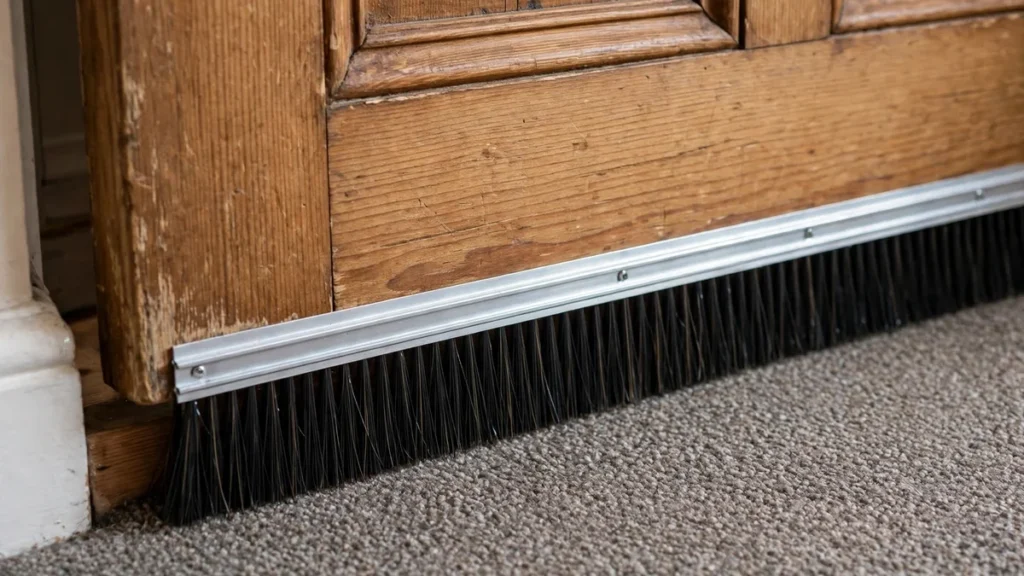
A strip with fine nylon bristles fixed to a metal or plastic rail, screwed or stuck to the bottom or edge of a door. Brush strips are durable for external doors and for doors that are used a lot, because the bristles bend rather than wear flat. They need a straight edge to fit against, so check the door and frame are not badly warped first.
Self-adhesive foam or EPDM strip
A peel-and-stick strip that goes around a door or window frame. Foam strips compress to fill small, even gaps. EPDM rubber strips suit slightly larger or less even gaps and tend to last longer in a damp hallway or porch. Clean the frame, let it dry, and press the strip firmly along its full length so no section lifts at a corner.

Chimney draught excluder
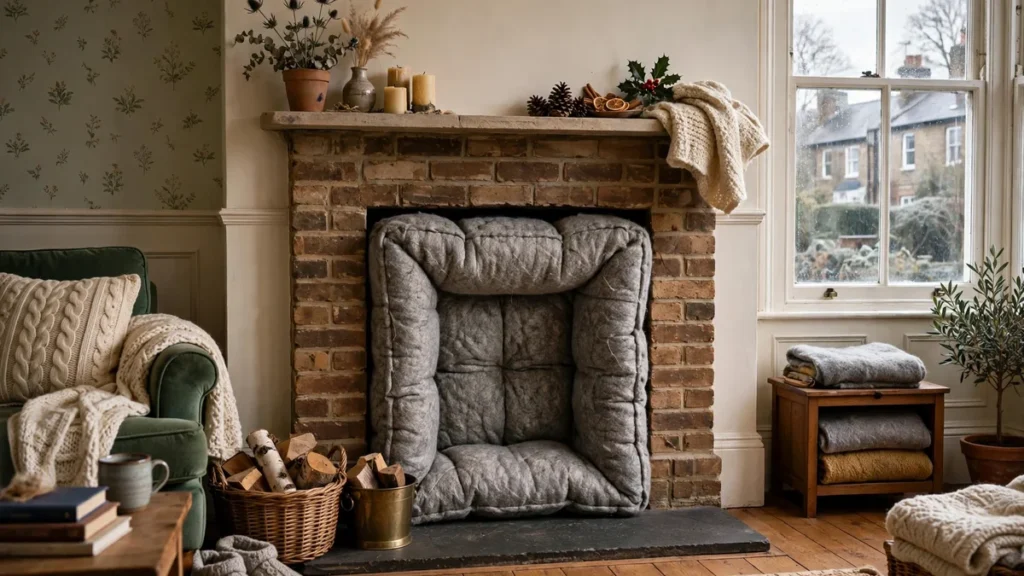
A shaped pad or plug made to fit inside an open chimney, just above the fireplace. It is made to be removed easily, so the chimney can be brought back into use. It must fit snugly — too small and air will pass around it, too large and it will not sit properly. Only use one in a chimney that is not in use, and follow the maker’s guidance for gas fireplaces and ventilation.
How to measure your gap before buying
- Close the door or window and look at the gap in daylight, or slide a piece of paper through it to find where it moves freely.
- Measure the widest part of the gap with a ruler or a set of feeler gauges, in millimetres.
- Measure the length you need to cover — the full width of the door, or the full run of the frame.
- For a chimney, measure the shape and size of the opening, not just one side, because flues are often oblong or round rather than square.
- Write both numbers down before you shop. A product made for a different gap size is the most common reason a draught excluder disappoints.

UK home notes
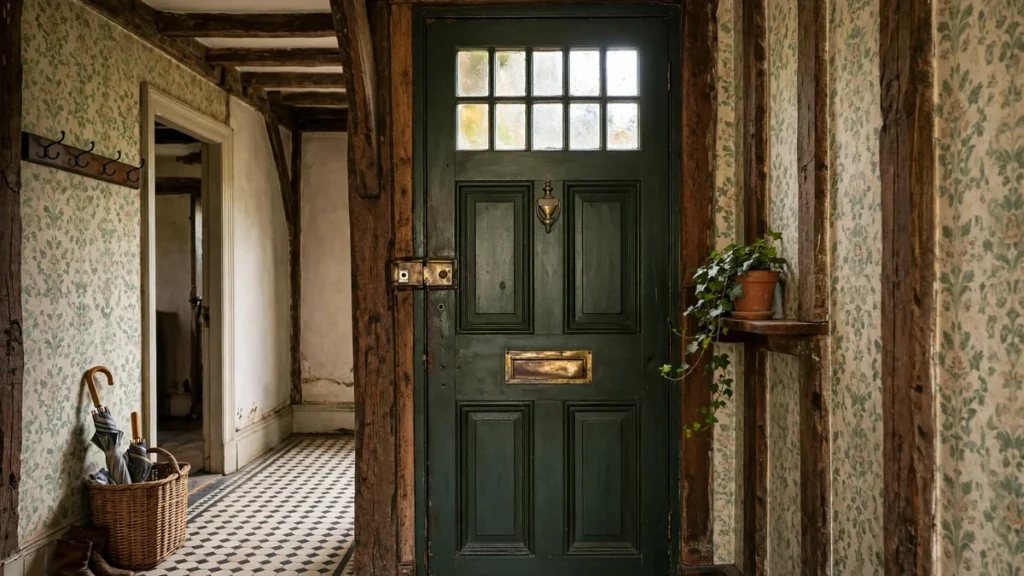
Many UK homes are older, with timber doors and sash or casement windows that have moved slightly over time. That means gaps are rarely the same all the way round a frame, so a flexible strip often works better than a rigid one. Internal doors matter too: a draught under a bedroom door can pull warm air from a heated living room into a cold hallway. Letterboxes are a frequent culprit in Victorian and Edwardian front doors — a brush letterbox plate is a small job that can make a noticeable difference. In flats, check the front door to a communal hallway as well as windows, because that door is often the largest single gap.
Common mistakes
- Buying a fabric excluder shorter than the door, so cold air passes at one end.
- Fitting a self-adhesive strip to a dusty or damp frame, so it peels off within days.
- Sealing a chimney that is still in use, or sealing it so tightly that ventilation is lost where it is still needed.
- Sealing only the front door and ignoring windows, letterboxes and loft hatches.
- Expecting one excluder to warm a whole house — draught-proofing helps comfort and heat retention, but it works best alongside loft insulation, curtains and sensible heating controls.
How to choose: a simple checklist
- Gap under a door, door used often: fabric draught excluder, full door width.
- Gap around a door frame, external door: brush strip.
- Small, even gap around a window or internal door frame: self-adhesive foam strip.
- Larger or uneven gap around a frame: EPDM rubber strip.
- Open, unused chimney: fitted chimney draught excluder in the correct shape and size.
- Letterbox draught: brush letterbox plate, fitted to the existing letterbox.
Best draught excluders
1. Best for open, unused chimneys
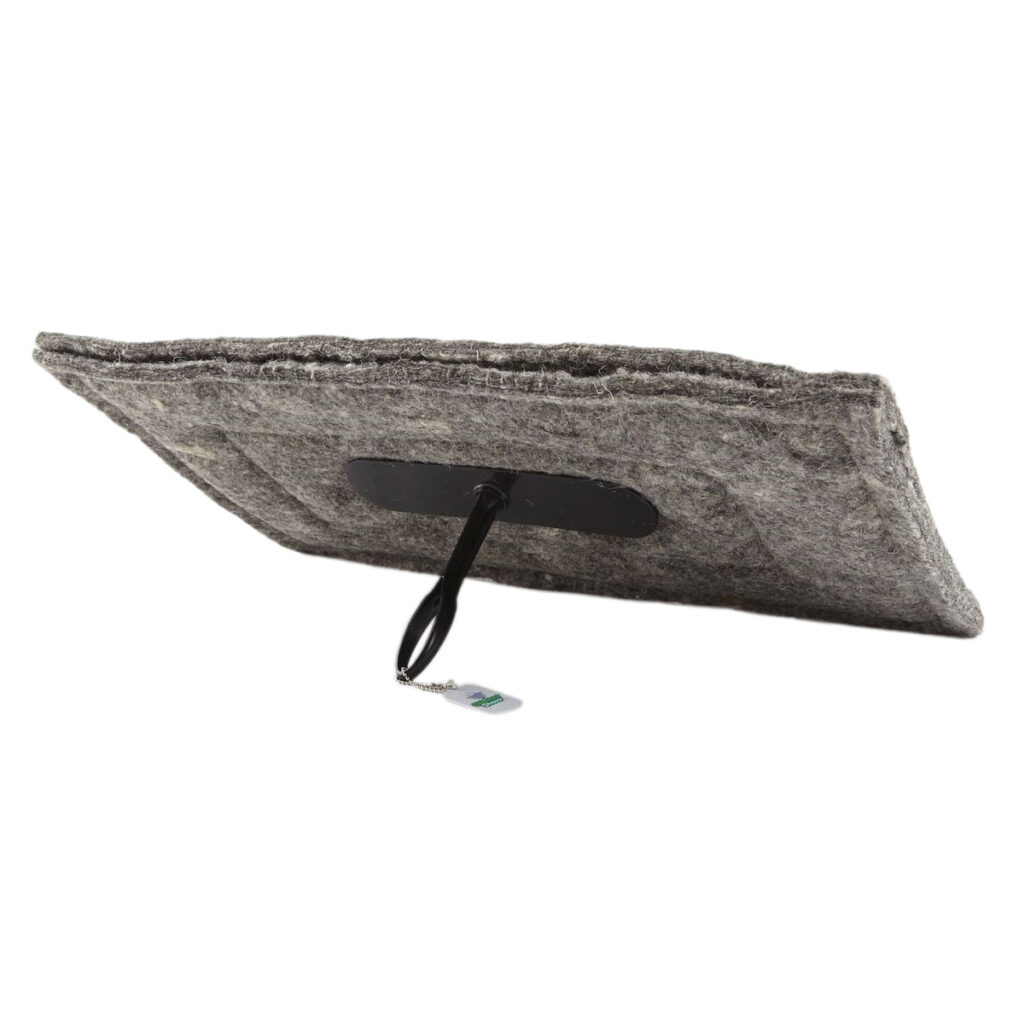
Chimney Sheep® Draught Excluder – Oblong 14″ x 24″ (36cm x 61cm)
What I like: natural wool, removable, made in the UK.
What I don’t like: only suits a chimney of the right shape and size, so measuring first is essential.
Key specs: felted Herdwick wool, made in Cumbria, UK wool, removable with handle and extension rod, size 36cm x 61cm (14″ x 24″).
2. Best for doors where a heavier, decorative fabric excluder is wanted
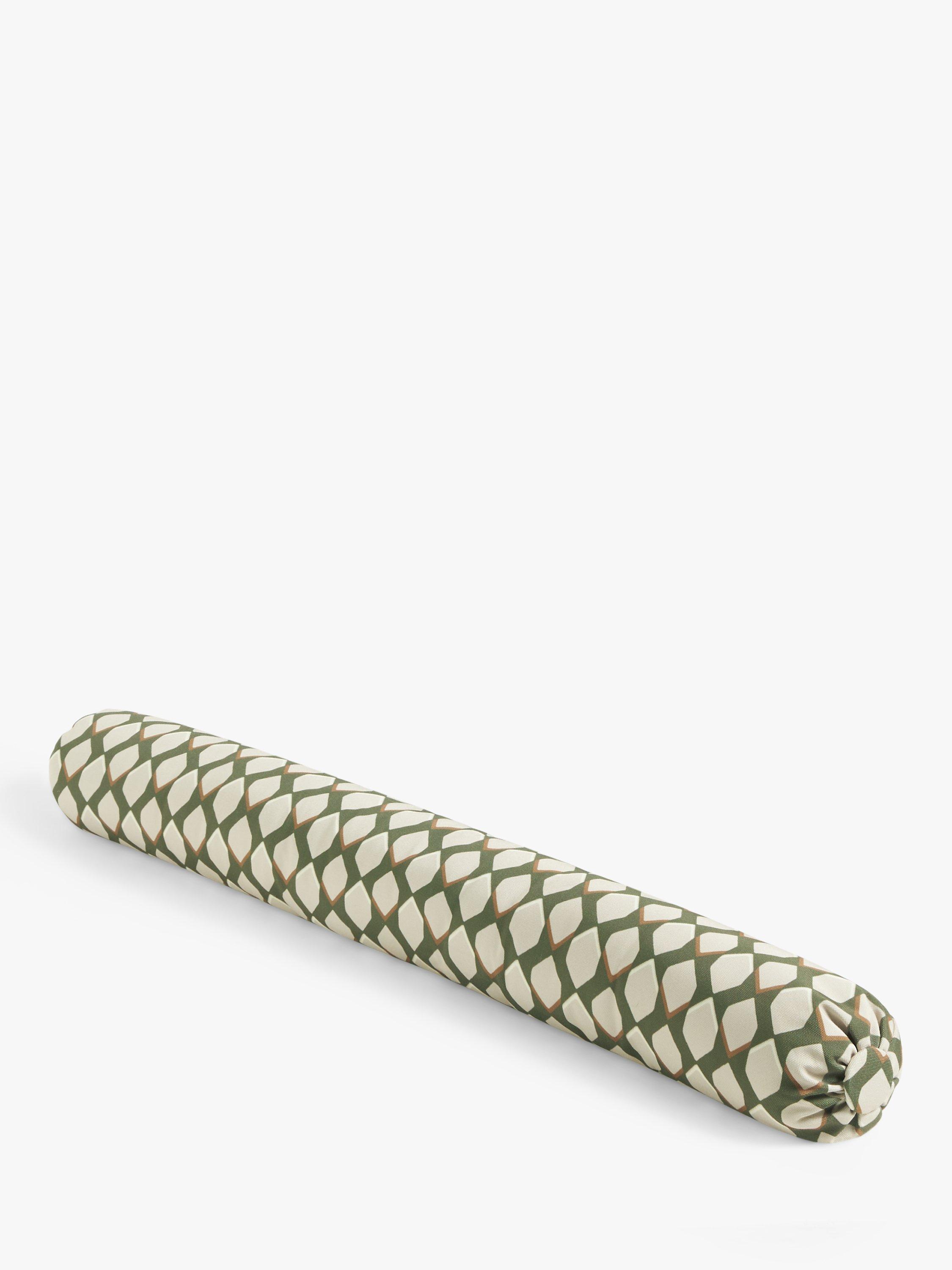
John Lewis Woven Geo Draught Excluder, Sage
What I like: woven polyester cover with covered button ends, PE bead filling, and a 101 cm length that covers a full door width.
What I don’t like: heavy at 3.50 kg, so less easy to lift and store than a lighter fabric excluder, and wipe-clean only care.
Key specs: woven polyester, PE bead filling, L101 x Dia.12cm, weight 3.50 kg, wipe clean with a damp cloth, Sage colourway.
3. Best for gaps around a door or window frame
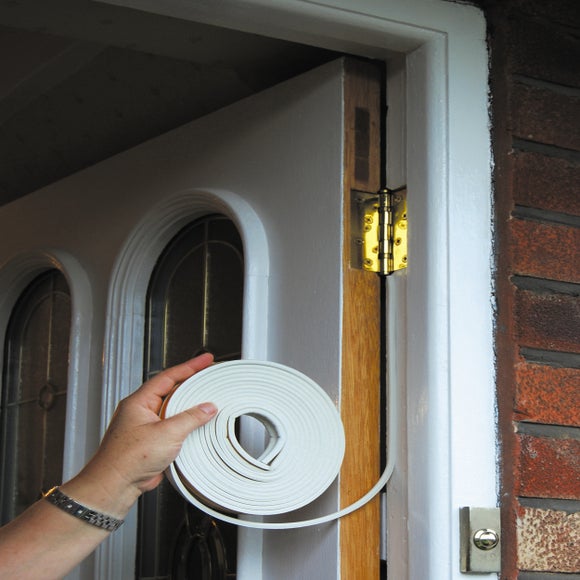
Stormguard Draft Excluder Self Adhesive Strip Tape
What I like: self-adhesive EPDM rubber, long-life, seals gaps of 3-5mm, and a 5m coil that is easy and fast to fit.
What I don’t like: only seals gaps of 3-5mm, so it will not suit larger gaps, and it needs a clean, dry frame to stick properly.
Key specs: self-adhesive EPDM rubber draught strip, seals gaps 3-5mm, 5m coil, colours Black / White, wipe clean only, brand Stormguard.
What is the best draught excluder for a UK front door?
For a front door used daily, a brush strip on the frame or a long fabric excluder at the base both work; a brush strip lasts longer on an external door, while a fabric excluder is easier to move and store.
How do I measure a door gap for a draught excluder?
Close the door, measure the widest part of the gap in millimetres, and measure the full width or frame length you need to cover before you buy.
Do draught excluders work on windows too?
Yes. Self-adhesive foam or EPDM strips around a window frame seal the same kind of gap as around a door, provided the frame is clean and dry when fitted.
Can I use a draught excluder on a chimney?
Only on an open chimney that is not in use, with a removable excluder made for that flue shape and size, following the maker’s guidance on ventilation and gas fireplaces.
Will a draught excluder stop all cold air in my home?
No single product will. It closes one gap at a time, so check doors, windows, letterboxes and loft hatches together for the best result.
How long does a draught excluder last?
Fabric excluders last as long as their filling and cover hold up, while fixed brush and EPDM strips tend to last longer because they are fitted to the frame; replace any strip that has flattened, lifted or torn.